Browser Fingerprints
IP Risk: How IP Reputation and Fraud Scoring Protect (and Threaten) Your Multi‑Account Work
IP Risk: How IP Reputation and Fraud Scoring Protect (and Threaten) Your Multi‑Account WorkBrowser Fingerprints
Every ip address you connect from carries a hidden dossier. Platforms read it before you even finish loading a page. Here's how ip risk scoring works, why it matters for your operations, and how to keep your accounts safe.
What Is IP Risk and Why It Matters in 2026
IP risk is the combined threat level, trustworthiness, and fraud likelihood tied to an ip address. It encompasses ip reputation (historical behavior), fraud score (real-time abuse probability), and blacklist status (presence on known blocklists). Together, these signals determine whether platforms treat you as a trusted user or a potential threat.
This matters because ip risk directly impacts account creation, logins, ad approvals, and payment flows on platforms like Google, Meta, TikTok, Amazon, and Binance. A high ip risk score or poor reputation can trigger automatic bans, SMS verification loops, disabled ad accounts, or suspicious behavior flags-even for legitimate users running honest campaigns. Businesses use IP fraud scores during sign-ups and payments to filter out bad actors before damage occurs.
In 2026, platforms no longer evaluate ip addresses in isolation. They combine ip intelligence with device fingerprints and behavior patterns for layered fraud detection and fraud prevention. IP fraud scores help identify risky online behavior, but they're only one input in a much larger system.
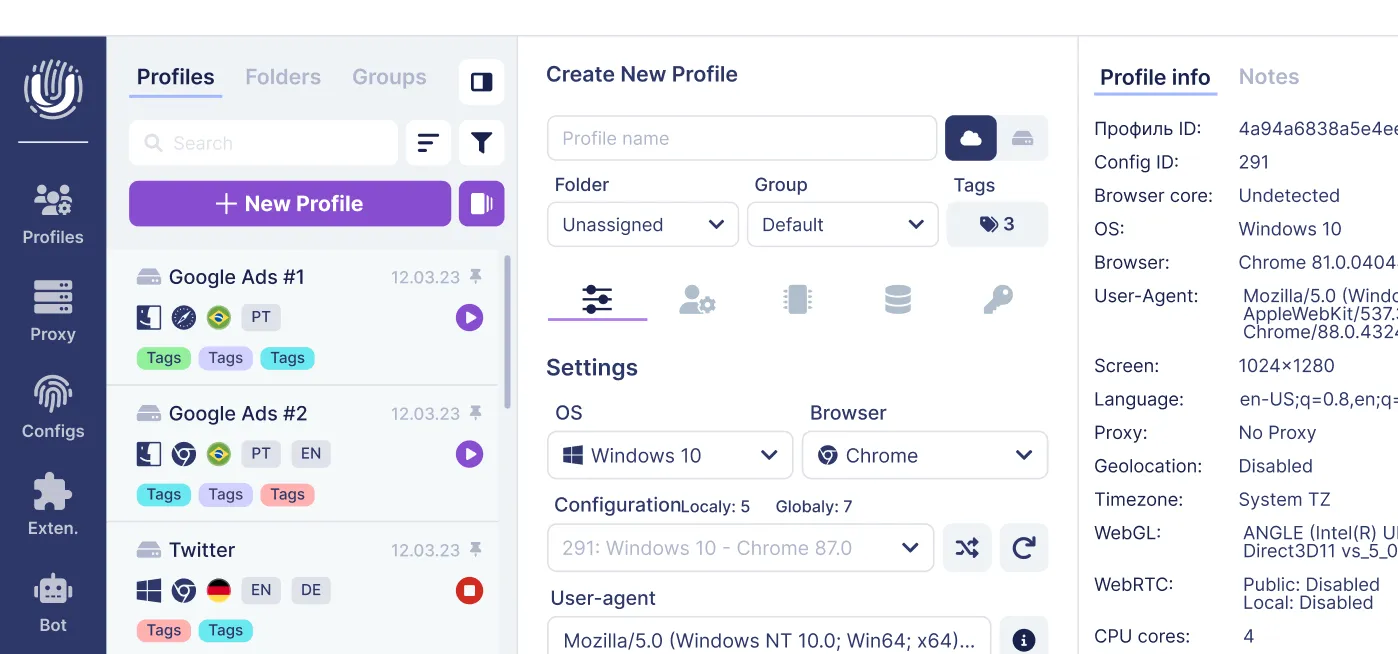
Undetectable.io antidetect browser operates in this space as an antidetect browser designed to control and minimize ip risk for multi‑accounting, traffic arbitrage, and social media marketing-not to help commit fraud. The stakeholders who care most about this include fraud teams, growth marketers, affiliate specialists, e commerce operators, and privacy-focused users.
How IP Reputation and IP Fraud Scores Actually Work
Modern systems no longer rely on a single yes/no ip blocklist. Instead, they use continuous ip fraud scoring and ip reputation intelligence to make nuanced decisions about every connection.
An ip fraud score is a metric-typically ranging from 0 to 100-that estimates the likelihood an ip address is tied to abuse, bots, chargebacks, fake accounts, or other high risk behavior. High IP fraud scores indicate strong signals of abuse. Scores are calculated based on detected signals like VPN usage, proxy usage, anonymizer use, and recent complaint history. Some providers that use a 0–100 scale classify scores around 90 or higher as high risk. However, thresholds and resulting actions vary significantly between providers and platforms.
IP reputation is the longer-term "credit history" of an address. Think of it as the accumulation of spam activity, login abuse, scraping incidents, bot attacks, and automation attempts stored over weeks or years. IP reputation scores gauge trust based on behavior patterns observed across the internet.
Common data points in an ip reputation score include ASN and subnet reputation, open ports, known proxy and vpn provider ranges, Tor exit nodes status, spam and abuse reports, malware C2 history, and traffic anomalies. IPQualityScore detects proxies and VPNs using real-time data, layering these signals into a composite score.
The practical bands work roughly like this: low risk (score 0–24), medium risk (25–74), and high risk (75+). Each platform uses slightly different thresholds, and most never publicly disclose their exact models to avoid giving bad actors a roadmap.
Key IP Risk Signals: What Makes an IP Address "High Risk"
Not all high risk users are criminals. Some are simply caught sharing infrastructure or using tools that resemble fraudster setups. Understanding what triggers risk flags helps you avoid them.
Major ip risk signals include:
- Known VPN and proxy ranges, including SOCKS5 and rotating residential proxy networks. Proxies and VPNs can mask real IP addresses during attacks, so any connection from these ranges gets extra scrutiny. IP risk scoring analyzes signals like VPN and proxy usage as primary indicators.
- Tor exit nodes and anonymizing services-nearly always flagged as high risk.
- Data center ip addresses commonly used for scraping, automated attacks, and bot activity.
- Residential IPs with a history of spam, credential stuffing, or card testing. Even a "clean" isp address loses trust after repeated abusive behavior.
- Unusual geolocation patterns: rapid country switches within minutes signal either compromised devices or deliberate evasion.
- Traffic velocity from one ip: hundreds of signups, logins, or ad clicks per hour suggest bot attacks or automated abuse.
- Mismatches between IP geolocation, browser language, and time zone-a strong anomaly signal that platforms use to detect malicious users.
An ip blacklist tracks addresses linked to fraudulent activity and helps filter out bots and spam traffic. Being blacklisted can block access to services and websites entirely. IP blacklists are used in industries like e-commerce and cybersecurity. However, blacklist status is now just one input in multi-factor ip risk models rather than a standalone gate.
Device fingerprinting amplifies these signals. Browser fingerprint quality-fonts, WebGL, canvas, WebRTC-combines with ip reputation to confirm or challenge a user's legitimacy. A clean ip address paired with a fingerprint matching known bot templates still raises alarms.
IP Fraud Scoring in Modern Fraud Detection and Prevention Workflows
IP fraud scoring is embedded into real-time decision engines at critical steps: sign-up, login, password reset, checkout, ad spend increases, and api usage. These checks run within milliseconds to avoid user experience lag.
A typical risk engine on a neobank or large marketplace runs an ip fraud score check alongside device fingerprinting, email and phone reputation, and behavioral analytics. Privacy-conscious operators can pre-test setups with an anonymity check for IP, WebRTC, DNS leaks, and browser fingerprinting. Fraud detection algorithms analyze IP usage patterns over time, building dynamic risk profiles for every connection.
Concrete examples show how this plays out:
- Crypto exchange sign-up (2024–2026): A high ip fraud score combined with a new email and mismatched KYC country triggers additional document verification or outright rejection.
- Meta Ads account creation: Repeated attempts from the same risky ip range cause instant disapproval and business profile review. Meta removed over 159 million scam ads globally in 2025. Separately, the company stated that more than 93% of 12.1 million pieces of violating ad content removed in India were detected proactively.
- E-commerce checkout: A high ip fraud score plus BIN mismatch plus new device forces 3-D Secure or manual review, guarding against payment fraud and chargeback fraud.
Fraud prevention systems use dynamic rules: auto-approve low scores, step-up verification for medium scores, and block high risk traffic aggressively. Many advanced setups also incorporate cloaking services to protect online campaigns from unwanted traffic and bots. IP risk scores may adapt as providers receive new threat intelligence, while fraud detection models are regularly recalibrated or retrained according to each provider’s data volume and system architecture. Sophisticated teams monitor ip reputation over time to detect "warming" or "cooling" of risky ips and adapt rules accordingly.
Risks of Ignoring IP Risk: Business, Compliance, and User Impact
Unmanaged ip risk harms both platforms and honest users, especially in adtech, fintech, gambling, and high-volume e commerce.
For businesses, the consequences are concrete:
- Higher chargeback ratios and penalties from Visa/Mastercard monitoring programs when fraudulent activity goes unchecked.
- Increased KYC/AML scrutiny under regulatory pressure from EU AMLD updates and FATF guidance.
- Inflated customer acquisition costs when bot activity or bonus abuse consumes promo budgets.
- Skewed analytics from fake signups, traffic bots, and click fraud distorting ROAS and LTV calculations.
For legitimate users and marketers, the pain is different but real: frequent SMS or ID verification challenges, sudden account locks after ip changes or proxy misconfiguration, and blocked access from certain ip ranges due to shared poor reputation on public Wi-Fi or cheap vpn exits.
Organizations also face threats when outbound infrastructure-SMTP servers, web servers, API nodes-gains poor ip reputation. This can tank email deliverability, trigger API rate-limits, or create security distrust downstream.
IP rights, and poor management of IP can lead to missed renewal deadlines and lost rights.
Robust fraud detection must balance fraud prevention with minimal friction for low risk traffic-blocking malicious activity without punishing good users.
Checking IP Reputation and Interpreting IP Fraud Scores
Teams should systematically check ip reputation rather than reacting only after blocks or complaints hit.
Common ways to perform a lookup include:
- Public ip reputation tools: A free tool or risk checker can quickly reveal blacklist status, geolocation, ASN, and recent abuse signals for any ip address appears on your radar.
- Commercial APIs: Services return structured ip reputation score and ip fraud score data for integration into back-end systems, often including 20+ data points like abuse velocity, connection type, and anonymizer detection.
- In-house logs: WAF, CDN, firewall, and auth logs show how specific ip addresses behave over time, revealing behavior patterns that external tools might miss.
When interpreting results, combine the fraud score with context: user history, basket value, country, and device profile all matter. Avoid hard-blocking entire /24 or /16 ranges solely based on a few abusive IPs. For mobile carriers and CGNAT networks, use velocity and anomaly rules instead of static blacklists.
Conduct regular audits of your network infrastructure, including outbound IP addresses, ASN ownership, blacklist status, abuse reports, reverse DNS records, and unexpected proxy or VPN exposure.
Recommend running monthly internal audits of your outbound ip space to ensure your server and proxies haven't accumulated a poor ip reputation score due to misconfiguration or abuse. On the privacy front, maintain transparent use of IP data and compliance with GDPR/CCPA when logging and enriching ip-based risk signals.
Managing IP Risk in Multi‑Account and Arbitrage Setups with Undetectable.io
Multi-account work-social media management, ad arbitrage, marketplace scaling-amplifies ip risk because many accounts share infrastructure, timing patterns, and behavioral overlap. Fraud engines correlate these signals aggressively, and without isolation, a single ban can cascade.
Undetectable.io helps reduce ip risk without encouraging fraud:
- Each browser profile carries a realistic, consistent fingerprint paired with an appropriate ip via proxies, rather than obviously artificial or duplicated setups. You can audit your fingerprint quality before going live.
- Local profile storage keeps fingerprints on your device by default, reducing cloud-side leaks that might associate multiple identities with one source.
- Unlimited local profiles on paid plans allow granular separation of projects, clients, and campaigns across distinct ip addresses, with different Undetectable.io pricing plans matching various team sizes and risk profiles.
Good-practice patterns for lowering ip scores on your operations:
- Use high-quality residential or mobile proxies tied to the same country and city as the profile's language and time zone.
- Avoid aggressive automation bursts. Spread actions over realistic schedules using the API and cookies bot to warm accounts gradually.
- Keep consistent login locations per account-do not jump from Germany to Brazil to India within one day on the same profile.
Effective network risk management requires consistent proxy assignments, appropriate access controls, clear rules for profile usage, and regular audits of account, device, and IP configurations. Team members should understand how unexpected location changes, shared proxies, and inconsistent profile settings can trigger additional verification.
Undetectable.io integrates into broader fraud prevention strategies by combining device control, proxy management, and internal risk scoring to maintain operations below high risk thresholds, and teams can quickly download and set up Undetectable for Mac and Windows to embed it into their workflows.
Best Practices and Future Trends in IP Risk Management
IP risk is becoming more dynamic as IPv6 adoption, carrier-grade NAT, and residential proxy marketplaces expand. Static approaches no longer work.
Best practices for today:
- Use layered signals-ip reputation, device fingerprint, behavioral analytics, payment signals-rather than relying purely on blacklist status. No single indicator tells the full story.
- Implement adaptive rules that update thresholds by region, device type, traffic source, and historical performance.
- Continuously test and recalibrate risk models against false positives affecting good customers. Overblocking legitimate users damages trust faster than fraud itself.
Near-future trends to watch:
- Increasing weight on behavioral biometrics and session-level anomaly detection versus static ip checks. How a user moves a mouse may matter more than which new ip they connect from.
- Wider IPv6 adoption makes maintaining traditional blocklists across massive address space increasingly difficult for organizations.
- Growth of AI-driven fraud rings using automated browsers and rotating residential ip pools-making legitimate-looking, undetectable setups a competitive necessity for honest operators, not just threats.
- Regulatory expansion through AMLD6 and FATF revisions placing greater obligations on businesses to monitor digital identity signals, including ip intelligence, during onboarding.
The likelihood of encountering high risk traffic will only increase as the internet grows more complex. Audit your current ip risk exposure today. Integrate ip fraud scoring into your workflows at every critical touchpoint. And use tools like Undetectable.io to keep abuse signals low while scaling multi-account operations responsibly. Block high risk traffic where needed, detect malicious users early, and protect your accounts from account takeovers-without sacrificing the speed your business demands.
Related posts
View all articlesJoin 450,000+ users who chose Undetectable
- Advanced anti-detection technology
- Unlimited local profiles from $49
- The perfect solution for multi-accounting