Web Scraping
Web Scraping Techniques: From HTML Parsing to Advanced Anti‑Detection
Web Scraping Techniques: From HTML Parsing to Advanced Anti‑DetectionWeb Scraping
Web scraping in 2026 is far more than fetching a page and grabbing some text. Between client-side rendering frameworks, sophisticated bot protection, and tightening regulations, the gap between a weekend script and a production-grade pipeline has never been wider. This guide walks through every layer of modern web scraping techniques, from foundational HTML parsing to the identity management strategies that keep large-scale operations running smoothly.
Quick Answer: Core Web Scraping Techniques in 2026
Web scraping is the automated process of collecting information from websites by fetching raw html, parsing the document object model, or intercepting hidden JSON APIs. Web scraping relies on techniques like http requests with html parsing and headless browser automation to pull specific data from web pages at scale.
The main data scraping techniques include:
- HTML parsing - extracting content from static websites using libraries like BeautifulSoup or lxml
- DOM parsing - analyzing rendered page structure after JavaScript execution
- XPath and CSS selectors - targeting precise nodes and attributes within html and xml documents
- Regular expressions - pulling patterns (emails, SKUs, currencies) from text blocks
- API interception - calling the JSON or GraphQL endpoints that pages use internally
- Headless browser automation - driving Playwright, Selenium, or Puppeteer to handle dynamic pages, bot protection, and ip blocking
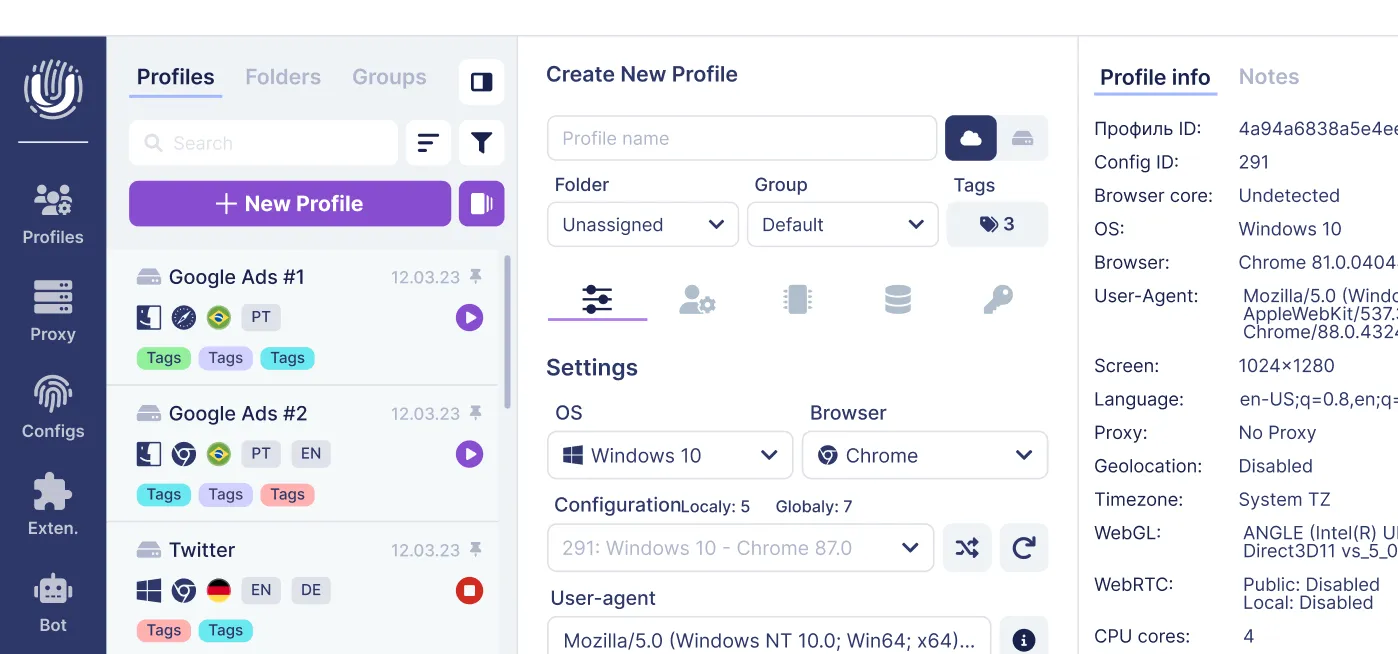
Modern web scrapers must also contend with anti scraping technologies, CAPTCHAs, and frequent HTML changes. Anti-detect browsers like Undetectable.io help teams manage multiple browser profiles, proxies, and fingerprints for safer scraping and multi-accounting. The sections below cover advanced web scraping architectures, legal considerations, machine learning workflows, and defensive techniques including embedding data in media objects or modifying html markup to deter extraction.
What Is Web Scraping and Data Scraping (and Why It Matters in 2026)?
Web scraping means programmatic extraction of structured or semi-structured web data from websites, APIs, and web apps, replacing manual copy-paste, which is a basic web scraping method requiring no technical skills but no scalability either.
Data scraping is the broader term. It encompasses screen scraping (including optical character recognition from images), PDF extraction, terminal scraping, and legacy app harvesting. Web scraping focuses specifically on HTML, web APIs, and browser-rendered content.
Concrete use cases in 2026 include:
- E commerce price monitoring - tracking competitors on Amazon, Walmart, and regional marketplaces in real time
- Social media sentiment analysis - scraping data from TikTok, Instagram, and X to power influencer scoring and brand monitoring
- Finance and quantitative research - hedge funds mining product reviews, job posting volumes, and shipping data for trading signals
- Lead generation and contact scraping - harvesting business directories, app stores, and job boards for marketing purposes
Organizations use web scraping to collect market pricing, product catalogs, and academic datasets at frequencies that manual methods cannot match. Scraped data powers dynamic pricing, ad arbitrage, SEO monitoring, and training machine learning models for recommendations or fraud detection. Vertical aggregation platforms automate data harvesting for specific sectors like travel, real estate, or insurance.
Large-scale collection now faces growing constraints: robots.txt files, terms of service, bot protection stacks, and AI crawler restrictions. Multi-account setups, such as managing hundreds of ad accounts or marketplace stores, rely on the same automation and fingerprinting concepts as scraping bots.
Core Web Scraping Techniques: HTML, DOM, XPath, and Regex
The "classic" techniques remain the workhorses of most scraping projects. Here is how each fits together:
HTML parsing is fast, lightweight, and effective for extracting data from server-side rendered websites. You send an HTTP request (using Python's import requests or Node.js's axios), receive the html document, and feed it into a parser. Beautiful Soup is a Python library for parsing HTML and XML, while lxml offers speed for large volumes. In Node.js, Cheerio provides a jQuery-like API. HTML parsing uses JavaScript to extract text and links efficiently when combined with rendering engines. Static HTML pages are easier to scrape than dynamic content loaded by JavaScript, making this approach ideal for static websites with consistent formatting.
DOM parsing analyzes HTML structure for data extraction after the browser has executed all client-side scripts. This matters when complex html structures are built dynamically. Inspecting HTML through developer tools helps in identifying unique tags and specific elements for extraction.
XPath is used to navigate and extract data from xml documents and HTML alike. XPath navigates HTML elements to select specific data with expressions like //div[@class="price"]/span/text(). CSS selectors offer a lighter syntax for most tasks - div.product > span.price grabs the same data with less verbosity.
Regular expressions extract specific text patterns from web pages - emails, phone numbers, currency values, or SKU codes - when structural cues are weak. They excel as a complement to selectors for post-processing, not as a primary extraction strategy.
Choose DOM parsing and selectors for structure; use regex for pattern matching and cleanup. Custom scripting allows maximum flexibility and customization for web scraping tasks, and correct selectors combined with a resilient parsing strategy are foundational to any plan to extract data at scale.
Handling Dynamic Pages and Client-Side Rendering
Static HTML scraping fails on most modern websites built with SPA frameworks like React, Vue, and Next.js. When the server sends a near-empty shell and JavaScript builds the page in the browser, your scraper sees nothing useful in the raw html.
Detecting dynamic web pages is straightforward: compare "View Source" (the server response) with "Inspect Element" (the rendered DOM). If View Source shows empty containers, skeleton loaders, or large script bundles, the page is dynamic. Check the network tab in developer tools for XHR or Fetch calls returning JSON - those are often the real data source.
Techniques for scraping dynamic pages include:
- Using headless browsers like Playwright, Puppeteer, or Selenium. Dynamic websites often require tools like Selenium and Playwright for scraping, and Selenium automates web browsers for scraping dynamic pages reliably.
- Calling the JSON endpoints directly, bypassing UI rendering entirely for speed and stability.
- Hybrid flows that use a headless session to discover API patterns, then switch to direct HTTP calls.
JavaScript-heavy sites may require browser automation tools for effective scraping. Headless browser automation can interact with dynamic web elements like buttons and forms - scrolling through infinite product listings, clicking "Load more," or accepting cookie banners. Browser automation handles content generated by JavaScript and mimics user behavior, making page state deterministic before extraction.
The trade-off is performance: browser automation is slower and resource-heavier than simple HTTP fetches. But for dynamic sites with logins, filters, or multi-step forms, it is essential. Anti-detect browsers like Undetectable.io help such automation look like genuine human sessions, reducing suspicion when operating scraping flows or managing many accounts on dynamic pages.
Advanced Web Scraping Architectures: Async, Scaling, and Resilience
A production scraping project targeting millions of URLs cannot rely on sequential requests. Modern scrapers must scale while staying under bot-detection thresholds.
Concurrency and async I/O. Use asyncio for concurrent requests in web scraping - Python's asyncio, Node.js event loops, and Go goroutines handle thousands of simultaneous connections efficiently for I/O-bound workloads. Separate I/O-bound and CPU-bound tasks for optimal performance: fetching HTML or JSON is I/O work, while parsing html, PDF rendering, or ML inference are CPU tasks best offloaded to worker pools via Celery, Sidekiq, or message queues like RabbitMQ. Scrapy is a Python framework for large-scale web scraping that handles much of this orchestration out of the box.
Resilience patterns keep you running:
- Implement token bucket rate limiting to respect site policies and avoid triggering 429 or 503 errors
- Exponential backoff with jitter on failures
- Circuit breakers that pause a domain when error rates spike
Divide-and-conquer strategies solve pagination at scale. Use recursive filtering to bypass pagination limits effectively - split large catalogs by date ranges, categories, alphabetical prefixes, or price bands. Pagination techniques are essential for scraping data spread across multiple pages, and these strategies prevent you from hitting hard caps on result counts.
State management through Redis queues or relational databases tracks cursors, filters, and checkpoints so scrapers can restart after failures without duplicating work or missing segments.
Mature teams orchestrate many scraper instances across IP pools and browser profiles. Undetectable.io provides isolated, fingerprinted profiles for each worker process - one profile per target site, each mapped to a stable proxy, reducing cross-correlation risks.
Data Scraping Techniques Beyond HTML: APIs, JSON, and Media Objects
Many modern websites expose structured data through APIs rather than embedding everything in HTML. Knowing when to skip the scraping process entirely and call an endpoint directly can save enormous effort.
API-first scraping starts in your web browser's developer tools. Open the network tab, filter by XHR or Fetch, and watch the JSON or GraphQL calls fire as a page loads. Many websites use JSON endpoints for loading data, which can be simpler to scrape than HTML. APIs provide structured data in formats like JSON or XML, making them reliable for data collection, and APIs are the most effective data extraction method when available. API-based collection is often preferred due to structured data and stability compared to scraping HTML.
Lightweight tools like IMPORTXML in Google Sheets or Excel's Power Query handle small-scale or ad hoc extraction without a full codebase. Browser extensions are user-friendly tools for scraping data directly in web browsers. No-code platforms like Octoparse provide a visual user interface to build scraping workflows without coding, and Octoparse offers a visual interface for non-coders to scrape data.
Media and document extraction covers data embedded in PDFs, spreadsheets, or media objects like images and videos. OCR tools such as Tesseract or cloud APIs (AWS Textract, Google Vision) read text embedded in images. Some defensive site operators intentionally move text into images or SVGs to deter scraping, which forces you into optical character recognition pipelines and raises extraction cost significantly.
Teams must weigh whether the ROI of complex extraction - CAPTCHAs, obfuscated HTML, embedded media - justifies the effort versus alternative data sources or partnerships.
Machine Learning, Computer Vision, and Semantic Techniques for Web Scraping
Machine learning is now woven into both the scraping workflow and the defenses that try to stop it.
ML-driven selector maintenance uses models to classify page types, detect layout changes, and automatically re-learn selectors when HTML structure evolves. AI-assisted scraping methods adapt to website changes and can extract information from complex layouts, reducing manual maintenance from days to minutes. Research benchmarks from early 2026 show that LLM-assisted agents can complete scraping tasks on moderately protected sites with fewer than five prompt edits, enabling non-experts to handle complex targets.
Computer vision approaches treat a rendered page as an image, recognizing visual components - product cards, buttons, banners - to extract data even when html markup is noisy or intentionally obfuscated. Studies evaluating 6,000 pages across domains like Amazon and Reuters reported 97.2–100% extraction accuracy with AI-powered methods, though naive agent approaches showed higher variance in production.
Semantic annotation leverages microdata, JSON-LD (schema.org Product or Article), and Open Graph tags to extract structured fields like prices, ratings, and availability without guessing at selectors.
Scraped web data powers downstream ML tasks: training recommendation systems, building RAG (Retrieval-Augmented Generation) pipelines, detecting fraudulent listings, and data mining for market research.
On the defensive side, anti-bot systems also use machine learning to flag non-human behavior, browser fingerprint anomalies, and suspicious IP or ASN patterns in real time data streams. Realistic, diverse browser fingerprints - like those generated by Undetectable.io - help keep sessions within the "normal" behavior distribution that ML models expect, lowering block rates.
Legal, Ethical, and Compliance Considerations in Web Data Collection
Technique alone is not enough. In 2026, teams must account for law, contracts, and platform rules before launching any scraping project.
Robots.txt and Terms of Service are the first checkpoints. Good scraping practices include checking a site's robots.txt and managing request rates respectfully. Review the website's Terms of Service before scraping. Check the robots.txt file before scraping - it signals which paths the operator wants crawlers to avoid. While robots.txt is not always legally enforceable, violating it strengthens contract-breach arguments in court.
Key legal precedents shape the landscape. HiQ Labs v. LinkedIn established that scraping publicly accessible pages does not violate the Computer Fraud and Abuse Act. The EDPB's July 2026 guidelines clarify that scraping involving personal data for generative AI requires a lawful basis under GDPR Article 6, with emphasis on data minimization and transparency.
Copyright and privacy concerns remain serious. Scraping user-generated content containing personal data may trigger GDPR, CCPA, or equivalent obligations. Scrapers should respect terms of service and avoid excessive requests that could disrupt site operations.
Ethical best practices:
- Scrape during off peak hours to reduce server load
- Limit collection to necessary fields only
- Honor takedown requests and avoid republishing scraped content as a substitute for the original
- Keep request rates reasonable - rate limiting can slow down scraping attempts significantly, but respecting limits protects both you and the target
Growing restrictions on AI crawlers - publisher-level blocks, honeypot labyrinths, and explicit "no AI training" clauses - affect how teams build ML datasets. Undetectable.io focuses on privacy and anti-detection tooling; users remain responsible for ensuring their scraping and multi-account activities comply with local law and platform terms.
Common Obstacles: IP Blocking, Bot Protection, CAPTCHAs, and HTML Changes
Modern websites combine multiple defenses, so expect frequent friction in any scraping workflow.
IP-based defenses are the first layer. IP blocking occurs when scraping too frequently from a site. Geo-based blocking and ASN filters target datacenter IP ranges commonly associated with bot traffic. Rate limiting can slow down scraping attempts significantly or return 429 errors that stall your pipeline.
Bot protection stacks from providers like Cloudflare, Imperva, and Arkose monitor browser fingerprinting signals, TLS signatures (JA3/JA4), mouse movements, scroll patterns, and request timing to distinguish bots from legitimate website visitors. These systems profile traffic over time, flagging scraping even when IPs rotate and user agents change.
CAPTCHAs - reCAPTCHA v2/v3, hCaptcha, Turnstile - challenge bots with tasks easy for humans but expensive for automated flows. They increase latency and cost per page, especially on high-value targets like e commerce websites.
HTML churn is a deliberate defense. Websites may change HTML structure to hinder scraping - rotating class names, adding random wrapper elements, or shuffling DOM nesting without changing visual appearance. Fake or decoy dynamic elements mislead naive parsers.
Honeypots - hidden links, invisible form fields, bogus API endpoints, or trap links in txt files and sitemaps - catch unsophisticated web crawlers that click or fill everything indiscriminately.
Resilient scraping requires robust parsing, defensive coding, IP and identity management, and automated monitoring to detect breakage quickly. No single countermeasure works alone; you need layered responses across every data point in your pipeline.
Stealth and Reliability: Proxies, Browser Fingerprinting, and Anti‑Detect Browsers
To extract data reliably at scale and avoid ip blocking, you must manage identity at the IP, network, and browser levels simultaneously. A single weak signal - a mismatched timezone, a datacenter ASN, a default headless Chrome fingerprint - can burn an entire session.
Proxy strategies matter enormously. Residential IPs are less likely to be flagged than datacenter proxies; mobile proxies are trusted on the strictest platforms. Rotating IPs can help avoid detection and blocking, but rotation cadence matters: changing IP mid-session on a logged-in account triggers anomaly flags. Geo-targeted proxy services let you match the source ip address to the locale your profile claims.
Browser fingerprinting collects signals like user agent, canvas and WebGL hashes, installed fonts, screen size, timezone, language, and hardware concurrency to build probabilistic IDs. Research by WHoX tested 11 anti-detect browsers across 300+ signals and found all leave some artifacts, but the best tools minimize detectable inconsistencies significantly.
Simple tools - headless Chrome with default settings, generic proxy lists - are trivially flagged. Realistic fingerprints and consistent per-profile behavior reduce anomalies.
Undetectable.io lets you create many isolated browser profiles, each with unique, stable fingerprints, cookies, and proxy settings. You can assign one profile per target site or per client account, map each to a stable proxy, and use the Local API to control scraping sessions programmatically. You can also run your profiles through the BrowserLeaks anonymity check to verify fingerprint consistency before deploying.
Unlike solutions that centralize profiles in the cloud, Undetectable.io keeps local profiles on your machine - your data stays under your control, reducing leak risk and improving privacy for sensitive operations.
Maintaining Data Quality and Operating Large-Scale Web Data Pipelines
Volume alone is worthless if downstream teams receive inaccurate, duplicate, or stale data. Web data extraction must feed clean, validated records into analytics and ML systems.
Validation steps catch problems early:
- Schema checks confirm expected fields exist and have correct types
- Field-level sanity rules flag non-negative prices, valid ISO dates, and reasonable string lengths
- Cross-source reconciliation detects anomalies or missing segments when pulling the same data from multiple pages
Web scraping stores data in structured formats such as CSV, JSON, or databases. Structured data formats like CSV and JSON allow for easier analysis of extracted data downstream.
Deduplication prevents inflated datasets. Key-based dedupe on URLs or product IDs handles exact matches; fuzzy matching on product names or descriptions catches near-duplicates. Hashing normalized records enables comparison at scale.
Storage architecture typically flows from a raw landing zone (S3 or equivalent object storage) to a curated warehouse layer (Snowflake, BigQuery, PostgreSQL) and finally to analytics views tuned for BI and machine learning workloads.
Continuous monitoring is non-negotiable. Dashboards should track request success rates, latency, CAPTCHA frequency, and changes in HTML or JSON structure for critical domains. High quality data depends on catching breakage within hours, not days.
Practical applications include dynamic pricing engines, inventory forecasting models, ad arbitrage optimization, and social media performance benchmarking. Teams using Undetectable.io can orchestrate many long-lived browser profiles feeding data into centralized pipelines while keeping browsing artifacts - cookies, local storage - segregated per client or campaign.
Defensive Techniques: How Site Owners Mitigate and Detect Web Scraping
Understanding how sites defend against scraping helps you build more resilient web scraping software - and if you operate your own sites, protect your own content. The same techniques web scrapers work around are intentionally deployed by operators to safeguard pricing, content, and user data.
Common defenses include:
| Defense | How It Works |
| IP blocking & rate limiting | Throttles or blocks IPs exceeding request thresholds |
| Device fingerprinting | Builds probabilistic browser IDs from canvas, WebGL, fonts, TLS |
| JavaScript challenges | Requires JS execution to prove browser legitimacy |
| Behavior scoring | Flags non-human mouse, scroll, and timing patterns |
HTML markup randomization rotates class names, adds random wrapper elements, or shuffles DOM structure without changing visual appearance, breaking hard-coded selectors overnight.
Embedding sensitive content in media objects or PDFs forces data scrapers to use OCR or specialized parsers, making automated web data extraction slower and less reliable.
Server-side and client-side honeypots - hidden links, bogus API endpoints, and decoy fields - distinguish bots from legitimate users. Use CAPTCHAs to mitigate automated scraping attempts and increase the cost of large-scale extraction.
Enterprise-grade bot protection platforms use machine learning to profile traffic over time, catching web crawling patterns even when scrapers rotate IPs and user agents. Web crawlers are useful for collecting information from many pages rather than a single URL, but their breadth makes them easier to detect.
If you operate your own sites, combine these technical controls with clear policies, logging, and incident response for scraping and data exfiltration attempts.
Choosing the Right Approach and Where Undetectable.io Fits
The right web scraping tools depend on your team size, target complexity, and data volume. Here is how to match techniques to maturity levels.
Individuals and small teams should start with simple html parsing, CSS selectors, and occasional Selenium or Playwright sessions for dynamic content. Moderate proxy rotation and careful rate limiting handle most targets. Python code using BeautifulSoup or Scrapy covers the majority of use cases at this scale.
Mid-size and enterprise teams benefit from async architectures, centralized scheduling, robust monitoring, large rotating IP pools, and standardized parsing modules shared across projects. Separate search engines monitoring from e commerce scraping into distinct pipeline components.
When to prioritize which technique:
- HTML and DOM parsing for quickly changing sites with consistent formatting
- JSON APIs for performance and stability on modern websites
- ML or computer vision for adversarial or heavily obfuscated targets where the same data is hidden behind randomized markup
Undetectable.io is a core component for teams that need many browser identities - managing hundreds of ad accounts, marketplace stores, or geo-distributed test users - while running scraping or automation behind those profiles. It enables users to create unlimited local profiles on paid plans, with fine-grained proxy management per profile, cookie and session warming via cookies bot, and APIs that integrate with existing automation code via any programming languages.
Sketch your web data strategy, choose a technical stack, and then start with Undetectable.io's free tier to see how anti-detect profiles and proxy management affect your scraping reliability in a specific format that fits your workflow.
Related posts
View all articlesJoin 450,000+ users who chose Undetectable
- Advanced anti-detection technology
- Unlimited local profiles from $49
- The perfect solution for multi-accounting